

Like most songbirds, woodpeckers face a survival curve weighted heavily toward the first year of life — and lifespan varies noticeably across the five common backyard species, generally tracking body size.
Typical Lifespan by Species
- Downy Woodpecker: average wild lifespan around two years population-wide, though adults that survive their first year commonly live considerably longer
- Hairy Woodpecker: similar overall pattern to Downy, with banding records showing individuals living well beyond a decade
- Red-bellied Woodpecker: adults regularly live several years, with record individuals confirmed past a decade of age
- Northern Flicker: a documented lifespan pattern similar to the mid-sized species on this list
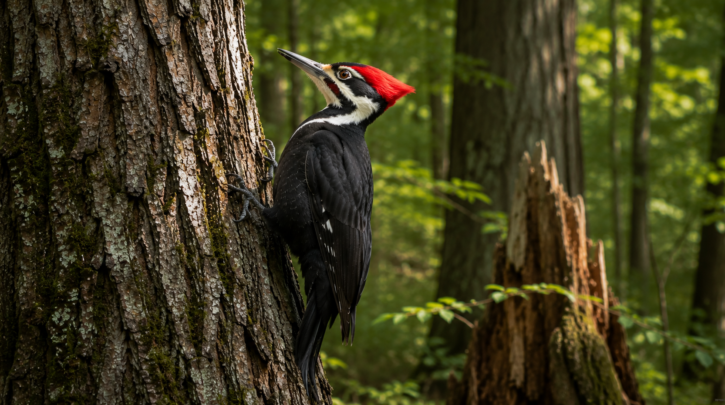
- Pileated Woodpecker: as the largest of the five, individuals that reach adulthood tend to have some of the longest confirmed lifespans among common backyard woodpeckers
The First Year Is the Hard Part
As with most small-to-midsized birds, a large share of woodpecker mortality happens in the first year of life — predation, starvation, and inexperience finding food and shelter all take a toll before a young bird has learned the ropes. Birds that survive that first year have meaningfully better odds for every year after.
Record Lifespans
Banding records show the oldest confirmed Hairy Woodpecker lived past fifteen years, and several other common species have confirmed records past a decade. As with most such records, these represent the upper end of the range rather than a typical outcome, but they demonstrate real longevity potential once a bird clears the risky first-year window.
Why Larger Species Tend to Live Longer
The general pattern — larger-bodied species living somewhat longer on average — holds across birds broadly, and it’s visible within this group of five as well. A Pileated Woodpecker, several times the body mass of a Downy, tends to show a higher typical lifespan, consistent with the broader relationship between body size and lifespan seen across the animal kingdom.
What Shortens a Woodpecker’s Life
- Predation at the nest cavity or on the wing, from hawks, owls, and climbing predators
- Habitat loss, particularly the removal of dead and dying trees that provide both food and nesting sites
- Window strikes, a documented risk for woodpeckers as much as for many other backyard birds
- Vehicle collisions, especially for ground-foraging Northern Flickers
What Increases Survival
- Retaining dead or dying trees (snags) on a property wherever safely possible, since they provide both food and nesting habitat
- A reliable suet source, particularly valuable in winter when natural insect prey is harder to find
- Reduced pesticide use, preserving the wood-boring insect populations most species depend on heavily
Want to support woodpeckers through the year? See our suet guide for the food that matters most when natural insect prey is scarce.
How Banding Studies Track Woodpecker Survival
Much of what’s known about woodpecker lifespan comes from bird-banding programs, where researchers fit a uniquely numbered leg band on young or adult birds and track recoveries or re-sightings over subsequent years. Because most of these species are non-migratory residents rather than long-distance travelers, banded woodpeckers are often recaptured or re-observed closer to their original banding location than migratory species, making local population tracking somewhat more straightforward.
Site Fidelity and Territory Longevity
Woodpeckers that survive to adulthood often maintain the same general territory across multiple years, particularly the non-migratory species covered in our migration guide. A mature territory with reliable food and multiple suitable nesting trees can support the same resident pair, or a sequence of related birds, for many consecutive seasons.
Comparing Woodpecker Lifespan to Other Species
A typical adult lifespan in the several-year range, with some individuals living well past a decade, puts woodpeckers roughly in line with bluebirds and orioles once first-year mortality is factored out. The bigger structural difference across species isn’t lifespan itself but migration strategy — a resident Downy Woodpecker faces none of the added migratory risk that shapes lifespan and mortality patterns for an obligate long-distance migrant like an oriole.
Longevity and Cavity Reuse
A long-lived, territory-faithful woodpecker can end up excavating several cavities across its lifetime in the same general area, since most species dig a fresh cavity most years rather than reusing an old one. Over a decade or more, a single productive resident bird can leave behind a meaningful number of old cavities that go on to benefit an entire local community of secondary cavity-nesting species, covered in more detail in our old cavities guide, which is one of the more overlooked and genuinely long-term contributions a single long-lived bird can make to the broader habitat around it.