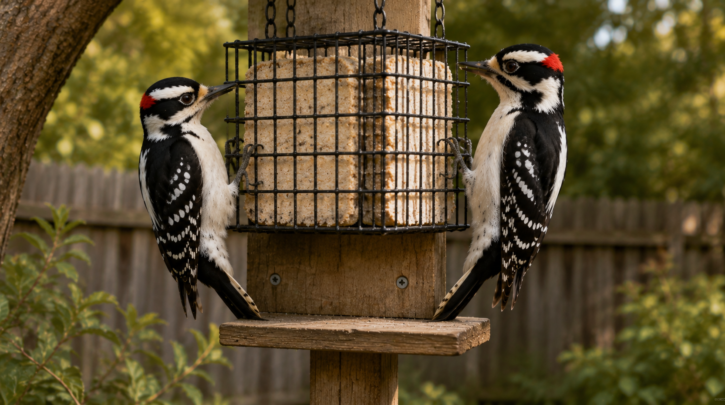

A tail-prop board is the single feature that separates a genuinely woodpecker-friendly suet feeder from one that just happens to hold suet. See our full feeder setup guide for why that prop board matters so much given how woodpecker anatomy actually works.
What We Looked For
- A dedicated tail-prop surface below or behind the suet cage
- Metal cage construction able to withstand repeated, forceful pecking
- A roof or cover to protect suet from rain and direct sun
- Sizing appropriate to the species you’re hoping to attract
Duncraft EZ Tail Prop Suet Feeder
A compact, vertical feeder with a long paddle-style tail prop, sized specifically for smaller species like Downy Woodpecker. Its smaller footprint makes it an easy first suet feeder for a yard that’s mainly seeing the smallest and most common backyard species.
See: Duncraft EZ Tail Prop Suet Feeder
Duncraft Tail Prop Double Suet Feeder
A classic double-sided design with a built-in tail-prop area beneath the suet cakes, made from Eastern white pine with a cable hanger. The double-sided cage lets more than one bird feed simultaneously, which matters on a property seeing regular visits from multiple species at once.
See: Duncraft Tail Prop Double Suet Feeder
Duncraft Pileated Tail Prop Feeder
Built specifically around an extended tail-prop area sized for the largest of the five common backyard species, this feeder addresses a real gap most standard suet cages leave unfilled — a Pileated Woodpecker’s size and tail length simply don’t fit comfortably on a prop board sized for a Downy or Hairy.
See: Duncraft Pileated Tail Prop Feeder
Matching Feeder Size to Your Local Species Mix
If Pileated Woodpeckers are active in your area, the extended tail-prop design is worth prioritizing over a compact feeder built for smaller species. In yards seeing mostly Downy and Hairy activity, a smaller feeder performs just as well and takes up less space.
What to Pair With a New Feeder
A feeder alone only covers part of the picture — retained dead wood on the property matters just as much for actually supporting a resident population. See our attracting guide for the bigger habitat picture beyond the feeder itself.
Ready to fill a new feeder? See our suet buying guide for what to look for on the ingredient label.
Material and Durability
Wood-and-metal combination feeders tend to hold up better over multiple seasons than all-plastic alternatives, particularly around the cage itself, which takes the direct force of repeated pecking. A feeder built to withstand a Pileated Woodpecker’s bill will handle every smaller species without issue, though the reverse isn’t always true.
Single vs. Double-Sided Feeders
A single-sided cage works fine for a yard with light, occasional woodpecker traffic, but a double-sided design lets two birds feed at once without one waiting for the other to finish, which matters more once a property has established regular visits from multiple individuals or species sharing the same general territory.
Hanging vs. Pole-Mounted
Hanging feeders are simpler to install and relocate, while pole-mounted feeders paired with a predator baffle offer better protection against squirrels and climbing predators. For a long-term, established feeding station, a pole-mounted setup is generally the more durable and secure long-term choice.
Roof and Weather Protection
A feeder with an overhanging roof keeps suet drier and slower to spoil in wet weather, and shields the cage itself from direct sun that can otherwise soften suet faster than expected even in cooler months. This becomes especially valuable during the humid, rainy stretches many regions see in spring and early summer.
Getting Started With a First Feeder
For anyone setting up a first suet station, a mid-sized tail-prop feeder that comfortably accommodates Downy and Hairy Woodpeckers — by far the most common backyard visitors — is a reasonable starting point, with an upgrade to a larger, Pileated-friendly design worth considering only once that species is confirmed active nearby.
Budget Considerations
Prices scale mainly with size and construction material rather than any dramatic difference in core functionality — a basic single-sided tail-prop feeder is genuinely effective and considerably less expensive than a large double-sided or Pileated-specific design, making it a reasonable place to start for anyone still unsure exactly how much woodpecker traffic to realistically expect.
Long-Term Value
A well-built suet feeder, properly maintained, can last many seasons of regular use, making the upfront cost difference between a basic and premium model relatively minor when spread out over its full working life. Choosing based on genuine durability and correct tail-prop design tends to pay off more over time than simply chasing the lowest possible sticker price alone at checkout every single time.
Final Thoughts
Whichever feeder you settle on, remember that a tail-prop board and metal cage construction matter more to actual woodpecker usage than any cosmetic feature, and prioritizing those two details first will serve any yard well regardless of which specific species end up visiting.