
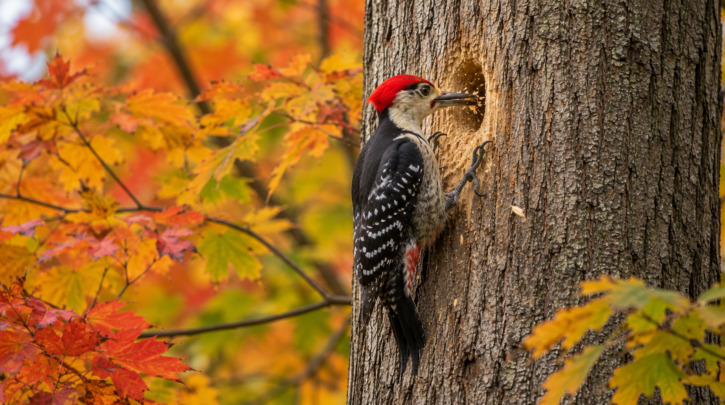

Fall is a quieter transition for woodpeckers than for a migratory species — no long journey to prepare for, just a gradual shift in diet and the start of dedicated winter shelter preparation.
Finishing the Molt
The post-breeding molt begun in late summer typically completes during fall, leaving adults in fresh plumage heading into winter. Because there’s no migration deadline to meet, this molt can proceed at a more relaxed pace than it would for a species preparing for a long flight.
The Diet Shift
As insect availability declines with cooling weather, most species lean more heavily on cached nuts and remaining fruit, a shift covered in more detail in our diet guide. Red-bellied Woodpeckers, with their already more omnivorous diet, tend to handle this transition especially smoothly given how much they already rely on cached acorns and other nuts.
Excavating Winter Roost Cavities
Fall is when many woodpeckers excavate a separate cavity used purely for overnight shelter, distinct from the breeding cavity used earlier in the year. This dedicated roost-cavity behavior is a genuine advantage of being able to excavate on demand — something no other species can replicate for itself.
Partial Movement in Northern Flickers
The one meaningful exception to an otherwise resident fall is the northernmost population of Northern Flickers, which shift south as winter approaches. See our migration guide for the details on this partial movement, which doesn’t apply to the bulk of the species’ range.
Loosening Territorial Boundaries
Outside the breeding season, territorial defense relaxes somewhat compared to the intensity seen during spring courtship and nesting, though most resident species still maintain a recognizable home range through fall and winter rather than abandoning it entirely.
Getting a suet feeder ready for the season ahead? See our suet feeder guide before winter demand picks up.
A Good Time to Retain Dead Wood
Fall is a reasonable time to take stock of standing dead wood on a property and consider whether any additional snags might be worth retaining ahead of winter, when both feeding and roosting cavity value matter most. See our attracting guide for the bigger habitat picture.
A Quieter, More Solitary Season
Compared to spring’s drumming and courtship or summer’s active nesting, fall brings a noticeably quieter, more solitary phase for most individuals, with less vocal and drumming activity overall as the demands of breeding recede for the year.
Preparing Feeders for Winter Demand
Because suet feeder activity peaks in winter, fall is a sensible time to make sure any existing feeder is in good repair and to consider adding a second station if last winter’s single feeder saw more competition than expected. See our suet feeder guide for tail-prop designs sized to whichever species are most common locally.
Comparing Fall to Other Species
Fall looks entirely different depending on which species you’re hosting. An oriole host’s fall centers on frantic pre-migration fueling before a complete seasonal absence. A woodpecker host’s fall is a quiet, gradual transition with no departure at all — just a shift in diet and the start of winter shelter preparation for birds that were never going anywhere.
A Good Season for Habitat Assessment
With breeding activity fully wrapped up and leaves beginning to drop in many regions, fall offers unusually clear visibility into a property’s existing dead wood and cavity trees, making it a practical time to assess what habitat is already present before deciding whether any additional retention or removal decisions are needed heading into winter.
Fruit and Nut Availability Varies by Year
Natural mast crops — the acorns and other nuts several species rely on heavily through fall and winter — vary considerably from year to year, and a particularly light mast year can push woodpeckers, especially Red-bellied Woodpecker, toward heavier reliance on suet feeders than usual. Watching feeder activity levels can sometimes offer an indirect clue about how a local mast crop is faring that season.
A Season Worth Watching Closely
Even without the drama of migration or the intensity of active nesting, fall offers a genuinely interesting window into behavior that’s easy to miss the rest of the year — roost cavity excavation, the early signs of a molt wrapping up, and the first subtle shifts in feeding pattern that signal winter is approaching.
Setting Up for a Successful Winter
Whatever habitat and feeding decisions get made in fall carry directly into how well local woodpeckers handle the coldest stretch of the year, making this transitional season more consequential for winter outcomes than its quiet, low-drama character might otherwise suggest.