
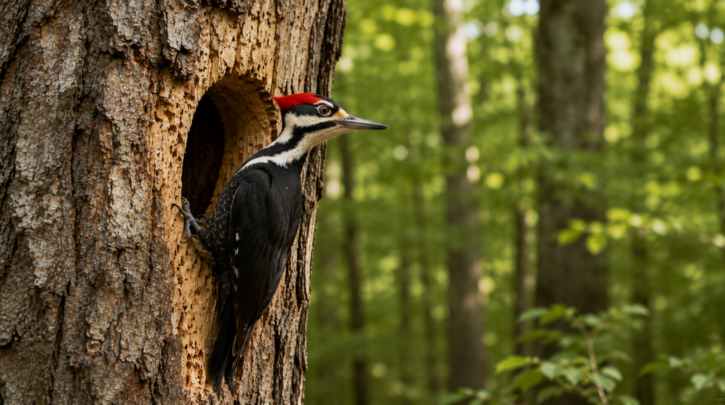

A cavity excavated directly into solid wood offers real protection compared to an open nest or even a wooden nest box, but it’s far from predator-proof — and one specific threat depends entirely on which species’ cavity size we’re talking about.
Threats to Eggs and Nestlings
- Climbing snakes, able to reach into a cavity entrance despite the thicker wood walls compared to a typical nest box
- Raccoons, capable of reaching into the larger cavities excavated by bigger species like Pileated Woodpecker
- Squirrels, which sometimes raid smaller cavities or compete directly for cavity space
- Other woodpeckers, occasionally usurping a cavity from a smaller or less dominant species
European Starlings: A Size-Dependent Threat
This is where woodpecker cavity size creates a genuinely different outcome than it does for bluebirds. A Downy Woodpecker’s roughly 1¼-inch entrance excludes European Starlings just as effectively as a correctly sized bluebird box does. But a Northern Flicker’s much larger 2½-to-3-inch entrance is well within starling range, making Flicker cavities a genuine and well-documented target for starling takeover — a threat that simply doesn’t exist for the smaller species on this list.
Why This Matters for Flickers Specifically
Because Flicker cavities are large enough for starlings to use, and starlings are aggressive, non-native competitors without the natural checks that limit native species, active Flicker nests are documented as being lost to starling takeover at meaningful rates in areas with dense starling populations — a parallel to the bluebird-versus-starling dynamic, just playing out at a different cavity size.
Threats to Adults
Adult woodpeckers are taken occasionally by accipiter hawks, particularly Cooper’s Hawks, and by owls hunting around dusk or targeting birds at a roost cavity overnight. Ground-foraging Northern Flickers face an additional risk from outdoor cats, given how much time the species spends on open ground compared to the more strictly arboreal habits of the other four species.
Why Cavity Design Still Helps
Despite these threats, the fundamental protection offered by solid wood walls, a narrow entrance relative to the interior chamber, and height off the ground still meaningfully reduces predation risk compared to an open nest — woodpecker nest success rates are generally higher than those of comparable open-nesting species, even accounting for the threats covered here.
Curious about the starling dynamic in more depth? See our guide to nest cavity size by species to understand which species face this risk and which don’t.
Managing Starling Pressure on Flicker Cavities
Because hole size alone can’t exclude starlings from a Flicker-sized cavity the way it excludes them from a Downy or Hairy cavity, managing this threat generally comes down to broader starling population control in an area — reducing food sources that support large starling flocks, and where legal and appropriate, active nest removal, since starlings are a non-native, unprotected species in the United States, unlike every native woodpecker covered on this site.
Recognizing a Starling Takeover
A Flicker cavity taken over by starlings typically shows a messier nest structure than a Flicker’s own minimal wood-chip lining, along with the noisy, chattering presence of starlings themselves in and around the cavity entrance — a similar identification approach to spotting a House Sparrow takeover of a bluebird box, just with a different competing species and a different cavity size.
Regional Predator Variation
The specific predator mix varies by region and local habitat. Areas with higher raccoon or climbing-snake densities see correspondingly higher nest-predation pressure on cavity-nesting woodpeckers, while areas with dense starling populations see disproportionately more pressure specifically on Northern Flicker nests compared to the smaller-holed species sharing the same general habitat.
What a Backyard Host Can Actually Do
Beyond monitoring for starling activity near Flicker-sized cavities, there’s limited direct intervention available for most predator threats on an active woodpecker cavity, since the excavation itself is inside solid wood well out of easy reach. Supporting overall habitat quality and avoiding unnecessary disturbance near a known active cavity remain the most practical steps most hosts can take.
When to Simply Let Nature Take Its Course
Not every predation event calls for intervention, and most predators targeting woodpecker nests — snakes, hawks, owls — are native species playing a normal ecological role rather than an introduced problem the way starlings represent for Flicker cavities specifically. Distinguishing between a natural predator doing what it’s evolved to do and a genuinely correctable problem like starling competition is worth keeping in mind before assuming every loss requires any direct human response at all.
Legal Protections and Predator Response
Because native woodpeckers are protected under the Migratory Bird Treaty Act, any response to a predation problem needs to stay within legal bounds — native predators like hawks, owls, and snakes are themselves generally protected as well, which rules out direct removal as a response even when a specific individual predator has clearly targeted a nest. Starlings remain the one meaningful exception where active, legal management is available to a concerned host.