
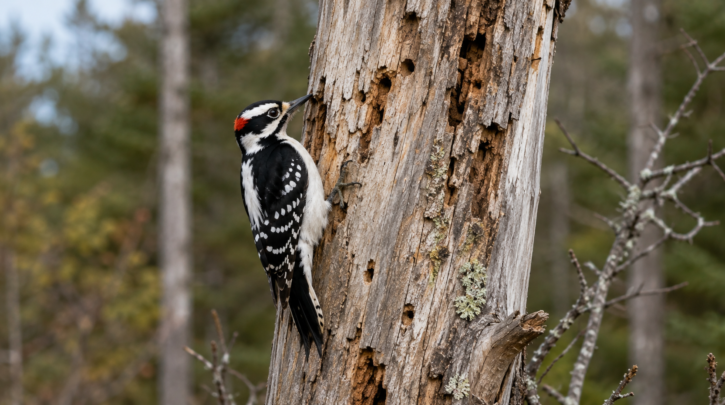

Attracting woodpeckers is less about a single feeder and more about the trees already standing — or not standing — on a property. The single biggest factor is one most yard maintenance habits actively work against: dead and dying wood.
This site participates in affiliate programs. If you buy through a link on this page, we may earn a commission at no extra cost to you. Affiliate disclosure
Retain Dead and Dying Trees Where Safe
Standing dead trees, known as snags, are simultaneously a feeding ground and a nesting site for woodpeckers — removing them is one of the most common ways a property unintentionally eliminates woodpecker habitat. Where a dead tree doesn’t pose a genuine safety risk to structures or people, leaving it standing does more for woodpeckers than any feeder purchase could.
When Removal Is Necessary
Not every dead tree can safely stay standing, particularly near a house, driveway, or power line. Where full removal is unavoidable, leaving a shorter standing trunk, sometimes called a snag stub, preserves at least some of the habitat value rather than clearing the wood entirely.
Offer the Right Food
See our feeder setup guide and suet guide for the specifics on suet, and consider adding a peanut feeder alongside it for variety.
If you’d like to see exactly which woodpeckers are visiting, the Birdfy Feeder Metal 2 4K is an all-metal smart feeder that records every visit and identifies the species; downy and red-bellied woodpeckers readily take sunflower seed from feeders like it.
Reduce Pesticide Use
Because wood-boring insects make up such a large share of the natural diet, heavy pesticide use directly reduces the food supply woodpeckers depend on. Minimizing pesticide use, particularly around any retained dead wood, preserves the insect populations that make that habitat genuinely useful rather than just visually present.
Plant for the Long Term
- Oak species — acorns are a favored food, particularly for Red-bellied Woodpeckers, which actively cache them
- Native fruiting trees and shrubs — opportunistic fruit-eating rounds out the diet across most species
- Mature trees generally — today’s healthy tree is a future snag, and planting now pays off for woodpecker habitat decades down the line
Provide Water
A shallow water source for drinking and bathing is a straightforward addition that benefits woodpeckers alongside nearly every other backyard bird, particularly during hot or dry stretches.
Avoid Disturbance During Nesting Season
Major tree work, particularly on any dead or dying wood that might host an active cavity, is best scheduled outside the spring nesting window covered in our nest cavity guide to avoid destroying an active nest without realizing it.
Be Patient
It can take more than one season for woodpeckers to discover a new feeder or habitat improvement, particularly in areas without an established local population. Consistency — keeping feeders stocked and retained dead wood in place year over year — tends to pay off more than any single change made all at once.
Ready to put up your first feeder? Start with our suet feeder picks, then consider what dead wood on your property might already be doing more work than you realized.
Working With a Small or Treeless Yard
Not every property can support a retained snag, and that’s fine — a well-stocked suet feeder alone can still draw woodpeckers from a neighboring property with better habitat, even without hosting a nest directly on site. Attracting woodpeckers for feeding and observation doesn’t strictly require replicating ideal nesting habitat to be genuinely worthwhile.
A Note on House Damage
Occasionally, a woodpecker will target house siding rather than a tree, usually because insects are already active inside the wood or because the siding’s resonance makes it attractive for drumming rather than feeding. This is a different issue from habitat attraction and is covered separately in our deterrent guide, since the solution isn’t to reduce overall habitat quality but to address the specific problem surface.
Avoiding Common Mistakes
- Removing every dead branch and snag from a property, eliminating both food and nesting habitat at once
- Filling a feeder with plain birdseed instead of suet or peanuts
- Using pesticides on the same trees you’re hoping will support insect-hunting woodpeckers
- Scheduling major tree work during the spring nesting window without checking for active cavities first
Working With Neighbors
Because woodpecker territories can span multiple properties, coordinating with neighbors on retaining dead wood or avoiding pesticide use during peak insect-foraging season can meaningfully improve habitat quality across a whole block, not just a single yard. This kind of informal coordination is worth raising if a neighborhood has an active local birdwatching or gardening community already in place and genuinely willing to compare notes and coordinate efforts.
Tracking Progress Over Time
Keeping simple notes on which species visit, roughly how often, and whether activity increases after a specific habitat change — a new feeder, a retained snag, a reduction in pesticide use — builds a genuinely useful record over multiple seasons. This kind of tracking makes it much easier to tell which changes are actually making a difference rather than guessing based on a single season’s activity.