
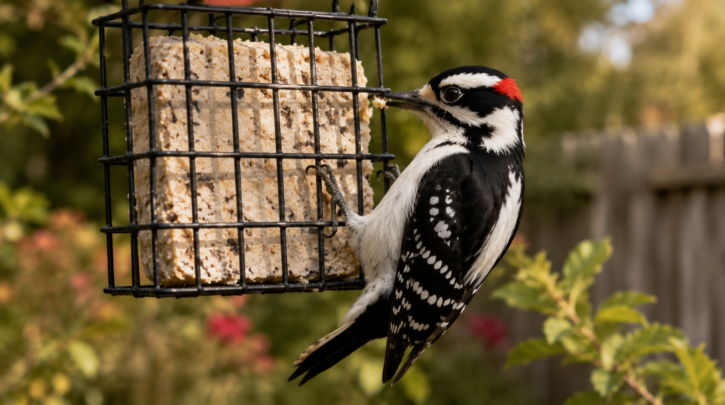

Suet is the single most effective food for attracting woodpeckers to a feeder, but not all suet is created equal — ingredient quality varies enormously between products, and getting it right matters both for attracting birds and for keeping the food itself safe to eat.
What Suet Actually Is
Traditional suet is rendered beef fat, formed into a solid cake and often mixed with additional ingredients — seeds, nuts, dried fruit, or even mealworms — to boost nutritional variety and appeal. The high fat content closely mirrors the energy density of the insect larvae woodpeckers naturally seek out, which is exactly why it’s such an effective attractant.
No-Melt Suet
Standard suet softens and can turn rancid in warm weather, which is both less appealing to birds and a genuine food-safety concern. No-melt suet is formulated with a higher melting point, typically by rendering the fat more thoroughly or blending in ingredients that raise the overall melting temperature, making it the better choice for spring through fall in most climates.
When Standard Suet Is Fine
In genuinely cold winter conditions, standard suet holds up well and is often less expensive than no-melt formulations. The distinction matters most as temperatures rise into the range where fat begins to soften and separate, generally above the mid-60s Fahrenheit.
Reading the Ingredient List
Higher-quality suet cakes lead with rendered fat and a genuine mix of seeds, nuts, or insects. Lower-quality blends are often bulked up with cheap filler grains like milo or wheat, which woodpeckers generally show little interest in and which mostly ends up scattered on the ground beneath the feeder rather than eaten.
Suet Varieties and What They Add
- Plain suet: a reliable baseline that works well across all five common backyard species
- Suet with peanuts or tree nuts: adds extra appeal, particularly for Red-bellied Woodpeckers, which already cache nuts naturally
- Suet with dried fruit or berries: broadens appeal to a wider range of visiting species beyond woodpeckers alone
- Suet with mealworms mixed in: a high-protein option that can draw extra attention during the demanding nesting season
Homemade Suet
A basic homemade suet — rendered fat, peanut butter, cornmeal, and seeds, melted together and set in a mold — is a genuinely effective and inexpensive alternative to store-bought cakes, provided it’s allowed to fully harden before offering it and stored properly between uses.
How Much to Offer
A single standard suet cake, refreshed every one to two weeks depending on activity level and weather, is plenty for typical backyard traffic. Watch for how quickly a cake is being worked through and adjust refill frequency based on actual demand rather than a fixed schedule.
Ready to set up a suet station? See our suet feeder picks for the cage and tail-prop designs that make suet easiest for woodpeckers to access.
Suet and Squirrel Pressure
Suet is just as appealing to squirrels as it is to woodpeckers, and a feeder without any squirrel-resistant design can end up feeding far more squirrels than birds. Mounting a suet cage on a smooth pole with a baffle, well away from jumping distance from any structure or overhanging branch, meaningfully reduces this competition.
Seasonal Suet Strategy
Suet activity tends to peak in winter, when natural insect prey is hardest to find, but a year-round station still gets steady use from resident species — particularly given that most of the five common backyard woodpeckers are non-migratory and present locally in every season. Switching to a no-melt formulation as temperatures rise in spring, rather than waiting until a batch has already spoiled, keeps a station consistently appealing.
Storing Suet
Unopened suet cakes store well at room temperature for extended periods, though refrigeration or freezing extends shelf life further, particularly for homemade batches without commercial preservatives. Frozen suet can be thawed and set out directly, with no meaningful loss of appeal to visiting birds.
Matching Suet to Your Local Species Mix
If Red-bellied Woodpeckers are common in your area, a nut-heavy suet blend tends to see especially strong use given the species’ broader omnivorous diet. In areas dominated by Downy and Hairy Woodpeckers, plain suet performs just as well as more elaborate blends, since both species are reliably drawn to straightforward rendered fat without needing extra ingredients to boost appeal.
Avoiding Rancid or Spoiled Suet
Discolored, foul-smelling, or visibly moldy suet should be removed and replaced immediately rather than left out, since spoiled fat isn’t just unappealing but can pose a genuine health risk to any bird that eats it. Checking suet condition at every refill, rather than only when a cake looks obviously depleted, catches spoilage before it becomes a problem.